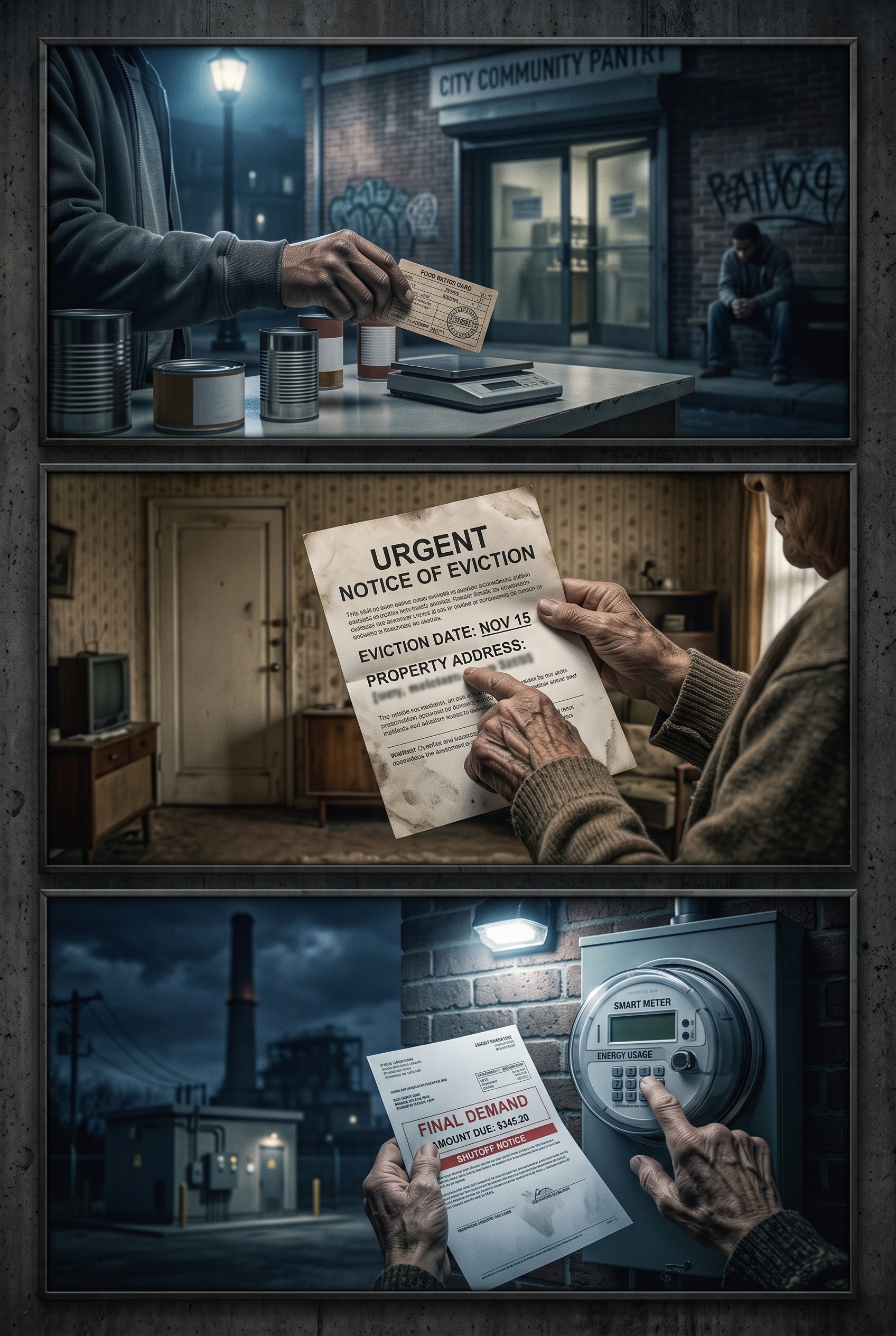
Food, Housing, and Energy
These are the things you actually need to live. Many people struggle to afford basic living conditions because the system makes them expensive and not sustainable. This page shows what you can do about it – not all at once, but one step at a time.
Food
Food is not a product. It’s how we stay alive. But the system has turned it into something else – cheap calories that make you sick, expensive options that are out of reach, and a constant hum of anxiety about what to eat and how to afford it.
The good news: you don’t have to play that game. Community kitchens, mutual aid networks, and urban gardens are already feeding people outside the system. You can start one, join one, or grow something in a windowsill.
Start with one meal. Share it with a neighbor. That’s how it begins.
Housing
A home is not an investment. It’s not a commodity. It’s where you live. But the system treats housing like a stock market – prices go up, people get pushed out, and empty buildings sit locked while families sleep in cars.
You can’t fix the housing crisis alone. But you can be part of the solution. Join a tenants’ union. Support mutual aid housing. Learn about community land trusts. If there’s an empty building in your neighborhood, ask who owns it. Ask why it’s empty.
The system wants you to believe there’s no alternative. There is. It just doesn’t look like a mortgage.
Energy
The sun doesn’t send bills. But the system has convinced you that power belongs to the grid – and that the grid belongs to someone else. Your electricity comes from a company that charges you more every year, and you feel like you have no choice.
But you do have choices. Solar co-ops are bringing power back to communities. Conservation reduces your dependence. Off-grid solutions exist, and they’re becoming more affordable every year.
You don’t have to install solar panels tomorrow. But you can start paying attention to where your energy comes from – and asking who profits from it.
Back to The “Wake Up” Call